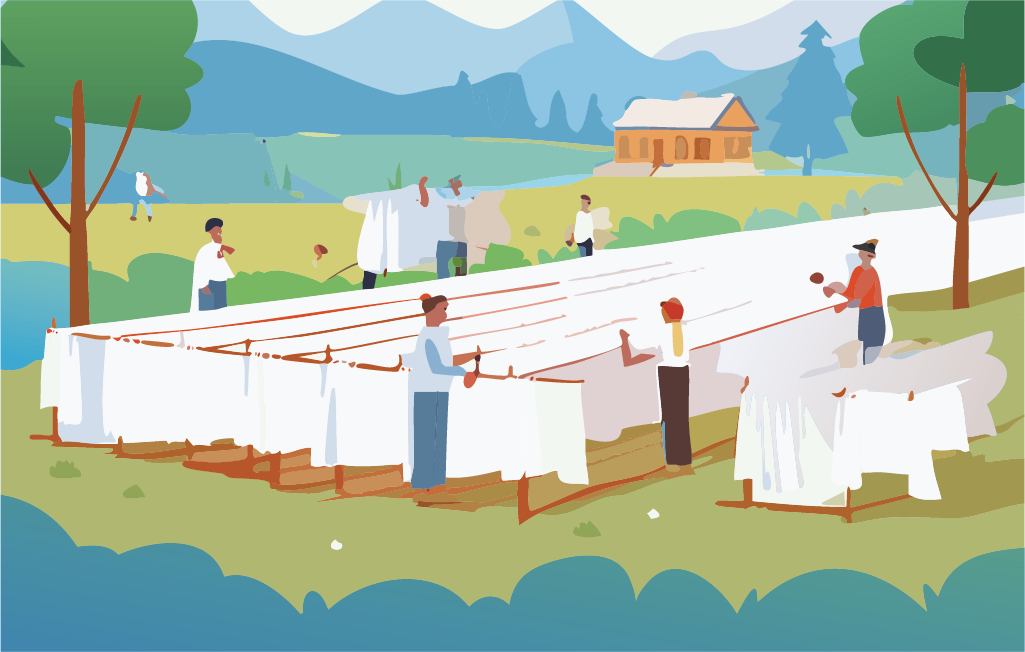
With the EU's Digital Product Passport regulation on the horizon, Brazil is uniquely positioned to lead in sustainable textiles. We explore what a DPP-ready Brazilian textile ecosystem could look like.
At Regen Studio, we are committed to pushing the boundaries of sustainability and transparency in global supply chains. With the European Union's new Digital Product Passport (DPP) regulation coming into force in 2027, brands operating in the EU will need to publish a DPP for any textile products entering the European market. This shift from brand sustainability to product-specific sustainability brings both challenges and opportunities.
What is a Digital Product Passport (DPP)?
A DPP is a digital interface linked to a product, where crucial data about the product can be viewed, interacted with, certified or added. It provides insight into the sustainability and circularity of the product and its components, and can create complete new business models and it will be a tool for transparency, tracking, and regulatory compliance that will reshape how we understand textiles. Read more about DPPs in our previous blog.
Why is this relevant for textiles?
As part of the European Union's Green Deal, the EU strategy on Circular Textiles and the Eco-design for Sustainable Products Regulation (ESPR), textiles have been placed at the forefront of products for which DPPs will be designed. After the DPP system standard is published at the end of 2025, a delegated act on textiles is expected in 2026, mandating DPPs for textiles. However, new regulatory demands going into effect in 2025 through the revised Waste Directive, make sure that companies also have to navigate the extended producer responsibility (EPR), which ensures that they are responsible for the cost of the end-of-life management of their products, which favors the use of a DPP as well.
Why Brazil?
Brazil is uniquely positioned to embrace this transformation, first and foremost because of its enormous production capacity for sustainable and circular textiles. Local bio-based source materials such as green cotton, hemp, and bio-based solutions provide a fertile ground for innovative textiles. Furthermore, Brazil has a strong innovation ecosystem surrounding the textile industry, and hosts a yearly Brazil Eco Fashion Week. With the eventual adoption of the Mercosur trade agreement, conditions for the trade of textiles will improve further. Therefore, Brazil is set to become a leader in sustainable and circular textiles.
Exploring a Brazilian Textile DPP Ecosystem
At Regen Studio, we are interested in helping the Brazilian ecosystem for textiles become DPP-ready. We see great potential in an experiment surrounding DPPs in Brazil — one that could bring together producers, brands, and technology providers to explore what this future looks like in practice.
The idea is not just about producing sustainable textiles but about building an entire ecosystem that integrates DPP into its core infrastructure. By simulating both producer, branding, and DPP system building under one roof, we can better understand the needs of the industry and create a system that serves all stakeholders.
The Core Products
DPP-ready White Label Shirts: These shirts would be made from sustainable, biodegradable, and recyclable materials. With a transparent supply chain and validated data, DPPs can be built surrounding the product, focusing on the sourcing of materials in Brazil itself. One exciting possibility is textiles made from banana.
A DPP-ready brand: To fully understand the requirements for the DPP system, especially in the context of international brands, an experimental DPP-ready brand could be set up. By focusing on storytelling and sustainability, such a brand would connect consumers with the source of the product, creating a unique value-driven experience that might unlock new business value.
A DPP System for Brazilian Textiles: Finally, after lessons learned with the product and the brand, an operational system for textile DPPs in Brazil could be developed, complete with technical interoperability standards, open-source building blocks, and licensing options — right in time for the regulations to kick in.
What Could This Look Like?
An initiative like this would naturally evolve in stages — starting with ecosystem formation and partnership building, moving toward a DPP-ready product, and eventually informing the design of a broader DPP system for Brazilian textiles. The exact shape would depend on the partners involved and the lessons learned along the way.
An Open Invitation
This is still an open question, not a fixed plan — and that's what makes it interesting. We'd love to hear from partners, brands, producers, and innovators who see potential in exploring what a DPP-ready Brazilian textile ecosystem could look like. Whether you're based in Brazil or working with Brazilian supply chains from Europe, there may be something worth building together.
See it in action
Want to see what a DPP system looks like?
Explore our interactive demo — tracking sustainable furniture from Brazilian forests through manufacturing, with UNTP verifiable credentials and ESPR compliance data.
Explore the DPP System Demo →Curious? Reach out at info@regenstudio.world and let's start a conversation.