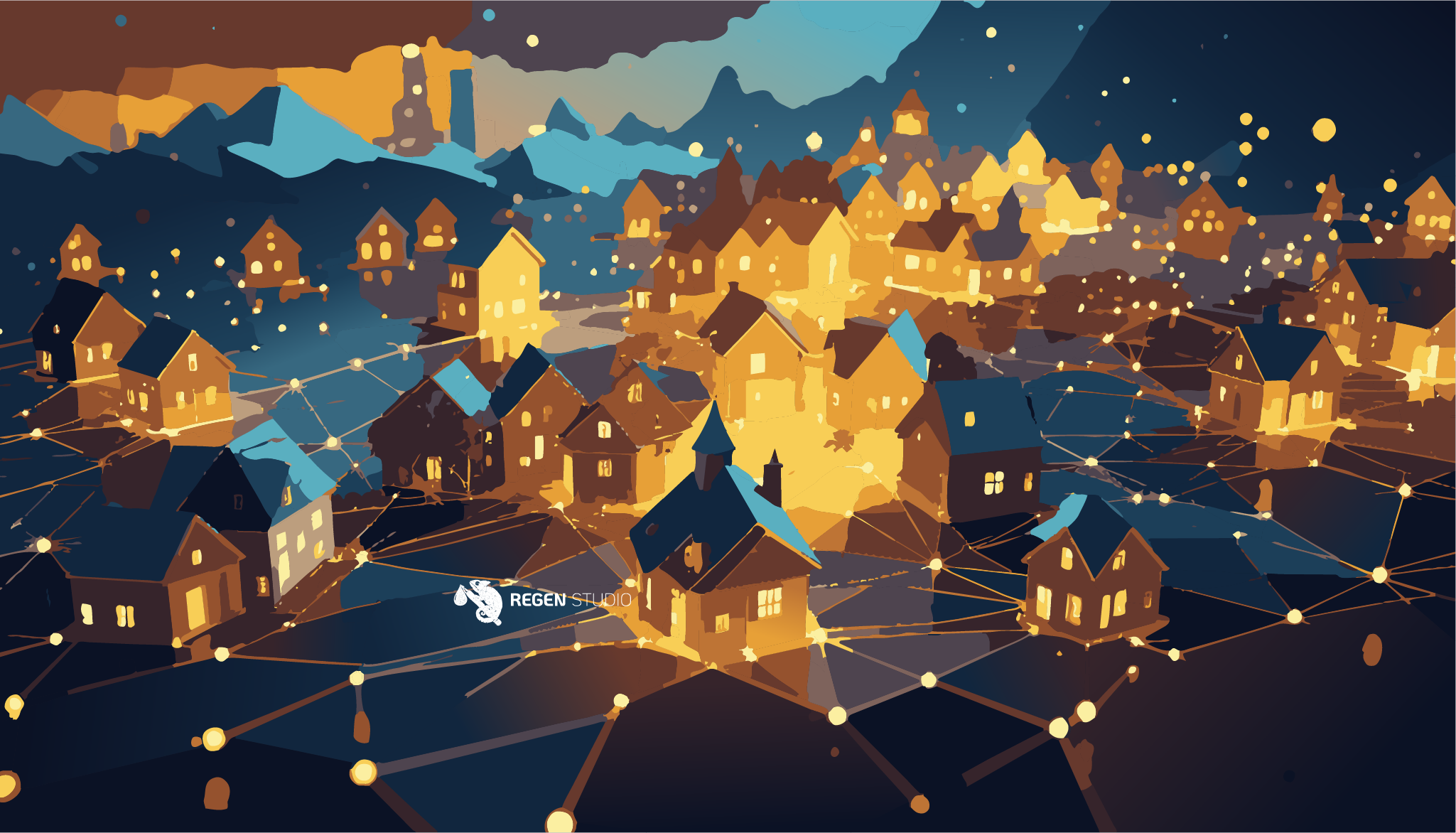
The Hague tested whether solar cooperative revenues from Slim Strandnet could be routed directly to people in need — reducing energy bills without requiring them to join a cooperative. Behind the experiment lies a larger vision: a city-wide social cooperative that ensures energy security and independence for everyone, regardless of whether they can afford a solar panel. Inside the design, the experiment, and what it takes to make the energy transition structurally just.
 in collaboration with
 &
&
The energy transition is often described as a collective challenge — one that requires collective action. But in practice, its costs and benefits have not been distributed equally. Households that can afford to install solar panels, heat pumps, or electric vehicles are insulated from rising energy prices and eligible for subsidies. Households that cannot — renters, people on benefits, those in energy poverty — absorb the price increases without access to the tools that might help them manage. The energy transition, as it has been designed, risks widening the inequality it was meant to address.
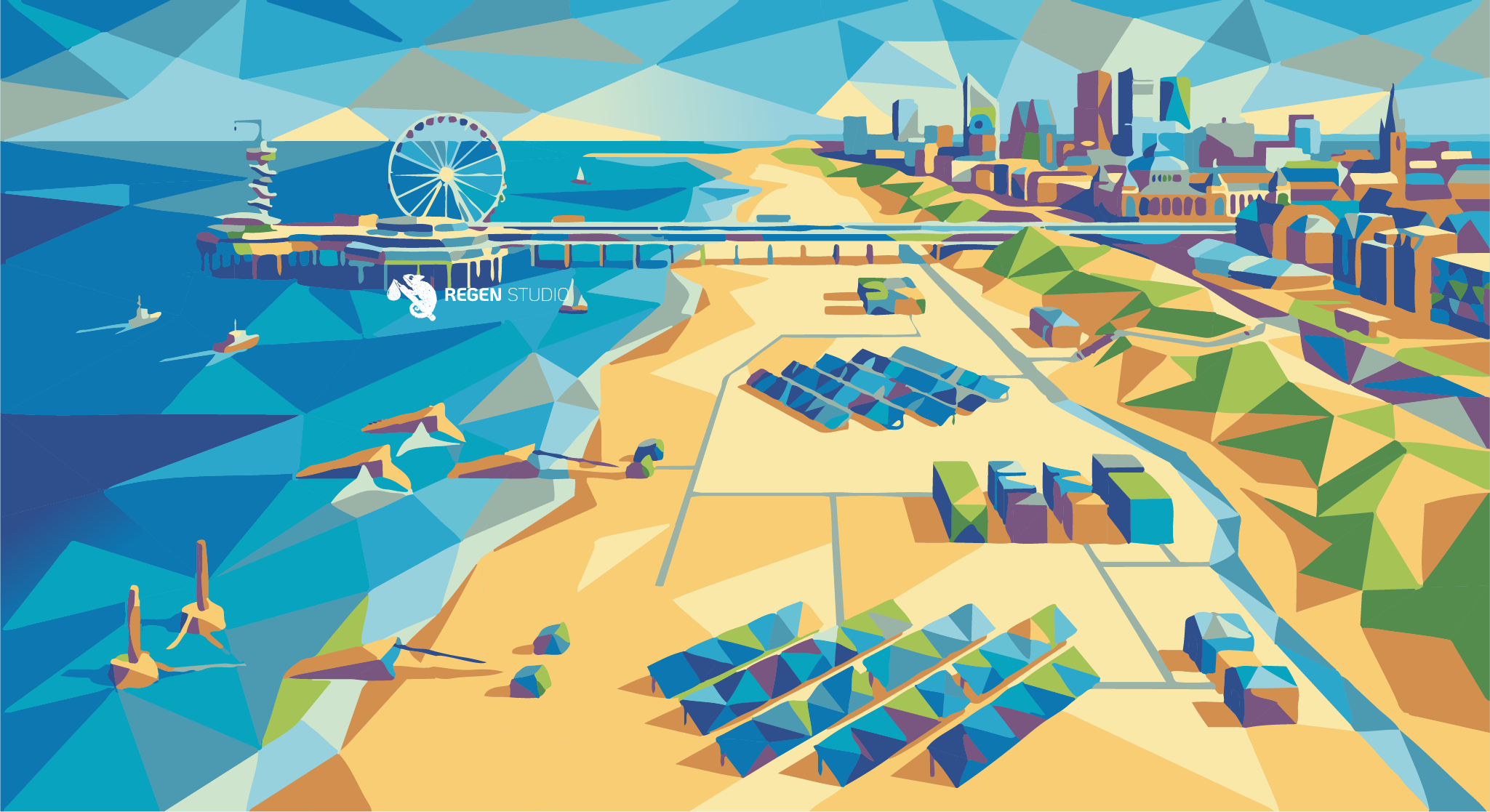
This is the problem that UC-0150 — Energierechtsvaardigheid set out to test. The project, developed by The Hague's Expertisecentrum Digitale Innovatie & Smart Cities (EC-DISC), asked a specific question: can the revenues generated by the Slim Strandnet solar cooperative at Living Lab Scheveningen be routed directly to people in need, reducing their energy bills or assisting in paying for basic needs? The future vision behind it is a systemic change to the way our energy system is organised and owned — one that puts individuals and communities at the centre, creating energy security and independence whilst riding the wave of the green transition. Can this transition be made to be just by design and have social dividends from within its own economic logic?
The project tested a mechanism — and in doing so, surfaced something larger: the vision of a city-wide social cooperative that ensures energy security and independence for everyone, regardless of whether they can afford a solar panel. Along the way, it also revealed that the existing gift policy governing welfare recipients was not yet equipped to accommodate this kind of social energy model, prompting the municipality's own department of social affairs to begin revising it.
The Concept: From Solar Panel to Energy Bill
The mechanism is straightforward to describe, even if its implementation required careful design. The Slim Strandnet cooperative — the smart microgrid at Scheveningen's northern harbour head — generates solar energy, sells what cannot be consumed locally, and produces a financial surplus. Under the experiment design, a portion of that surplus is donated by the Living Lab Scheveningen energy cooperative to a social cooperative operated by a local non-profit. That cooperative then applies the funds directly to the energy bills of the target group: households in need who cannot themselves participate in the energy transition.
The key insight is passive benefit. Rather than asking vulnerable households to navigate a cooperative membership, make upfront investments, or acquire digital tools they may not have, the model brings the cooperative's benefits to them directly — as a reduction on their energy bill. The cooperative does the work; the household simply pays less.
For the experiment, the team operated as if the city-wide social energy cooperative already existed — simulating it within the operational structure of a local non-profit. The chain from solar generation to social benefit was tested end-to-end within that simulated architecture, generating the evidence base for the real cooperative that would eventually replace it.
What the Validation Phase Established
Before the experiment could be designed, a validation phase was needed — to determine whether the concept was technically feasible, legally sound, and ethically robust. The validation phase produced five key findings — and one significant policy consequence.
Impact measurement. The right indicators were identified: not just financial metrics such as bill reduction, but awareness of collective energy provisions, participant experience, and replicability signals. The measurement framework was designed to feed directly into the experiment's evaluation.
Legal and ethical safeguards. The most sensitive dimension was the giftenbeleid — and the deeper the team looked, the clearer it became that the policy itself was the problem. A Data Protection Impact Assessment (DPIA) was used proactively as a design tool — not because it was legally required, but to shape a solution that would be accepted according to privacy law from the ground up, building compliance into the architecture rather than checking it afterwards. The meldplicht — the legal obligation to report donations to the relevant municipal authority — was built into the experiment as a dedicated work package, ensuring full transparency with the municipality from the start.
Technical architecture. The selected supplier, Voorstroom — chosen through a Startup in Residence challenge on energy justice that preceded this experiment [SiR challenge] — provided a platform that was proactively audited against ISO 27001 information security standards, used as a design benchmark to ensure the system was robust and trustworthy from the ground up. The platform includes mechanisms for data minimisation and workflow automation. [Use case: EC-DISC Smart City The Hague]
Communication strategy. Detailed communication with potential participants was deliberately deferred to the experiment phase. Premature communication risked raising expectations or creating perceptions of the project that would be difficult to manage once the experiment began.
Governance and decision-making. The Decision Making Unit for the experiment was defined, with task ownership sitting with SZW Innovatielab — the social innovation arm of the municipality's department of social affairs. Key stakeholders include the housing department and the legal team working on the gift policy safeguards.
The validation phase concluded that the experiment offered a viable path to energy justice in Scheveningen, and recommended proceeding to the experiment phase.
The Experiment Design: Six Steps
The experiment itself was structured as a six-step process, running from autumn 2024 through spring 2025.
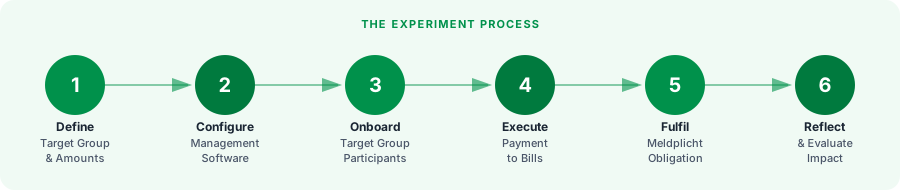
- Define the target group and amounts. Identify which households in need will participate, and determine the contribution per household.
- Configure the management software. Commission the Voorstroom platform to administer the cooperative's social contributions and track payments.
- Onboard the target group. Work with the local non-profit to bring participants into the system — with appropriate information, consent, and care around their legal situation.
- Process data and execute payment. Route the cooperative's financial contribution to participants' energy bills through the configured system.
- Fulfil the meldplicht. Report the donation to the relevant municipal authority as required — the formal reporting obligation that ensures the payment is correctly characterised for benefit purposes.
- Reflect and evaluate. Assess the experiment against the impact indicators, produce the phase report, and determine whether to proceed to the feasibility phase.
Parallel to these steps, the experiment included an impact measurement track and a communication workstream, carefully timed to avoid premature disclosure that might affect how participants perceived or responded to the project.
When Helping Can Inadvertently Hurt — and When Policy Must Change
The gift policy challenge deserves more attention, because it reveals something fundamental about the structural barriers to energy justice — and something important about what rigorous innovation design can achieve.
The intention of the experiment was clear: reduce energy costs for households that cannot benefit from the energy transition in any other way. But the Dutch social security system was not designed with this kind of passive cooperative benefit in mind. Under existing gift rules (giftenbeleid), a financial donation — even one with a clearly social purpose — can be classified as income for benefit calculation purposes. A household receiving a cooperative energy payment could, in certain circumstances, see their benefit payments reduced by a corresponding amount. The net effect would be zero. The intervention would help no one.
The meldplicht — the legal obligation to report donations to the municipal authority — added a further layer of complexity. Every payment had to be structured, reported, and documented in a way that correctly characterised the nature of the contribution, to prevent unintended welfare consequences. The experiment required dedicated legal work, a specific reporting architecture, and close collaboration with the relevant municipal departments.
Working through this required collaboration with legal experts and the relevant municipal departments to design a reporting structure that correctly characterised the nature of the payment. As a secondary — but notable — outcome, SZW Innovatielab recognised in the course of this work that the giftenbeleid itself was not equipped for the emerging reality of cooperative energy surpluses and community-owned infrastructure. A policy revision was initiated as a result. Sometimes the most valuable output of an experiment is not the answer to the original question, but the institutional insight that could only have been reached by asking it rigorously.
The Scale-Up Vision: A City-Wide Social Energy Cooperative
The experiment was designed not only to test whether the chain works in Scheveningen, but to generate the evidence and the institutional learning needed to scale the model across The Hague. The feasibility phase — planned to follow the experiment — will explore a set of interrelated questions.
On the financial side: how large can the stream of cooperative revenues flowing to the social cooperative become? This depends on how many local energy cooperatives affiliate with the city-wide cooperative, and how much generation capacity can be unlocked — including VvE rooftops via the Voorstroom methodology, neighbourhood cooperatives working with Duurzaam Den Haag, and new revenue streams from smart grid models like neighbourhood batteries, heat networks, and flexibility markets.
On the governance side: what legal form should the city-wide social energy cooperative take? How does it connect structurally to the local energy cooperatives that feed it? How is its board organised to represent both contributors and beneficiaries?
On the policy side: what do the experiment's findings imply for municipal energy policy? The ultimate ambition is a social rooftop policy — a framework in which every rooftop made available for solar generation carries a social dimension, with a share of its revenues flowing to the city-wide cooperative. This would make energy justice a structural feature of the energy system, not a voluntary add-on.

Regen Studio's Role
The innovation process that The Hague applies to its smart city cases — an eight-phase framework moving from problem analysis through ideation, prototyping, validation, experimentation, feasibility assessment, and adoption — was designed by Regen Studio's founder. The process has been applied across a wide portfolio of use cases within EC-DISC, The Hague's Centre of Excellence for Digital Innovation and Smart Cities.
Learn more about the city's digital innovation process used in this project:

For the Energierechtsvaardigheid case, Regen Studio facilitated phase 4 — the validation phase — working through the impact measurement design, the legal and ethical architecture, and the technical requirements. Regen Studio then designed phase 5 — the experiment plan itself: its structure, work packages, governance model, timeline, and the pathway towards the feasibility phase.
This is what innovation services look like in practice: not arriving with a prefabricated answer, but building the conditions — the process, the design, the experimental structure — under which a city and its partners can discover what actually works. And sometimes, what actually works is not just a new technical solution, but a new policy. Learn more about how we work on our Innovation Services page.


Interested in designing experiments for energy justice or social innovation in your city or region? Get in touch to explore what is possible.