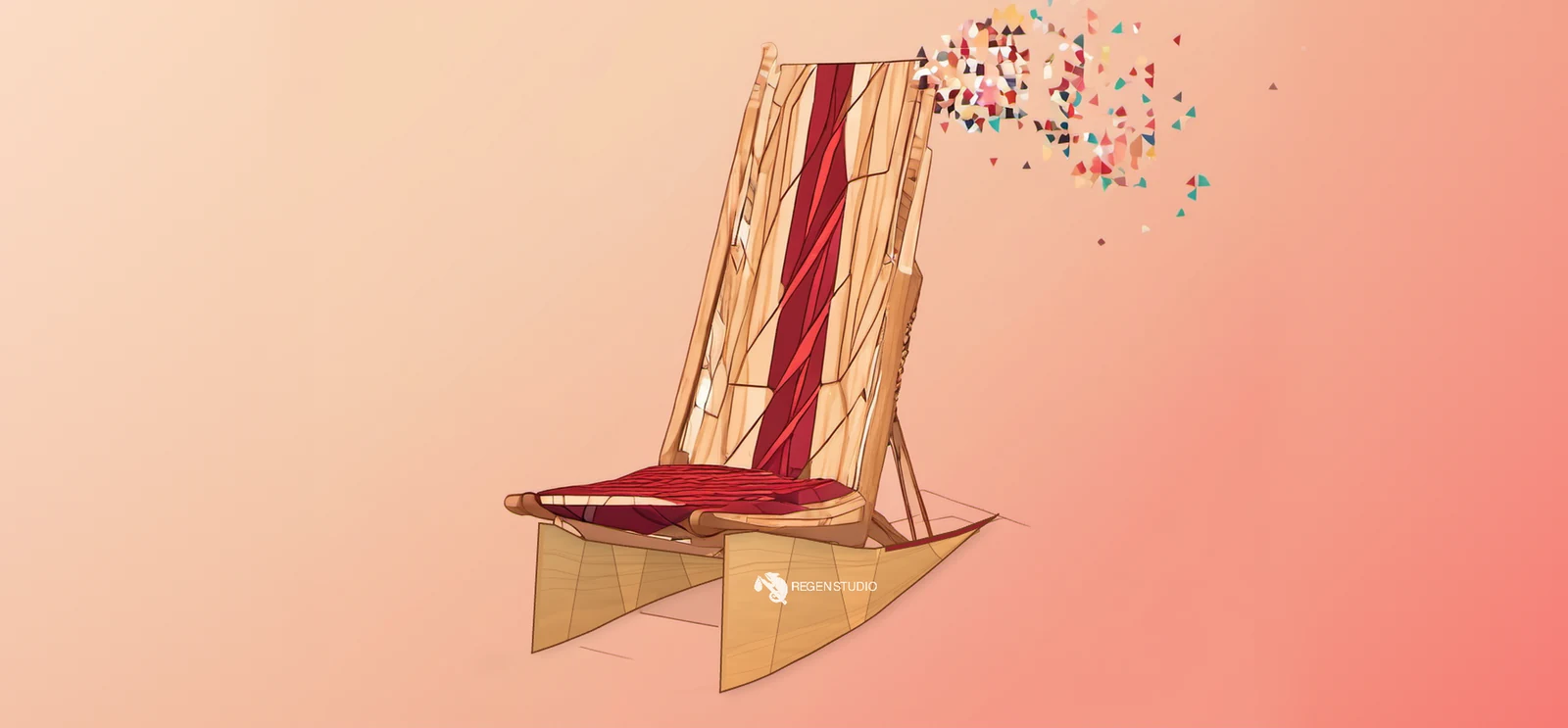
Regen Studio and Meubelmakerij Houtgoed explored which information a small furniture maker needs for a digital product passport: 218 data points, 129 in the passport and 89 in the maker's own records. We built a system that follows the working day, let the 3D model help fill it in, and put the passport of the Stadstoel, with version control, on the maker's own website.
 REGEN STUDIO




The project DPP voor Maatwerk Meubelmakers (DPP for Custom Furniture Makers, project number KVW3-00567) is co-funded by the European Union through the European Regional Development Fund (ERDF), the Province of South Holland and Kansen voor West III, the ERDF programme 2021-2027 for the western Netherlands.
Question
What does a digital product passport ask of a small furniture maker who builds every piece once?
Approach
We read seventy sources, explored 218 data points and built a light system that follows the working day.
Outcome
The Stadstoel (City Chair) has a passport on Houtgoed's own website. The lessons from the pilot are in the white paper Richting een Meubelpaspoort (Towards a Furniture Passport, in Dutch).
Regen Studio and Meubelmakerij Houtgoed in Rotterdam looked together at what the new European rules for sustainable products mean for a small workshop where every piece of furniture is a one-off design. A furniture maker who builds every piece once faces the same European rules as a factory that makes a cabinet a thousand times. The chemicals regulation REACH has no exemption by company size, and neither does the deforestation regulation (EUDR), so small makers have to keep records either way. For the Digital Product Passport (DPP) under the Ecodesign for Sustainable Products Regulation (ESPR), no exemption for small businesses is planned, but the scope of the furniture delegated act could in theory still leave makers of custom work outside the rules.
- 1
Map
what the rules could ask for together
- 2
Build a system
that the maker fills in while working, from input to passport
- 3
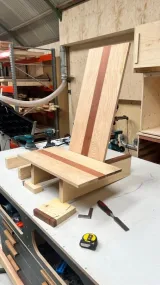
Make the furniture
the Stadstoel, of urban oak with a strip of teak
- 4

Publish the passport
on Houtgoed's own website
Below we describe what Regen Studio did in that pilot and the lessons we drew from it, which we also set down in a white paper.
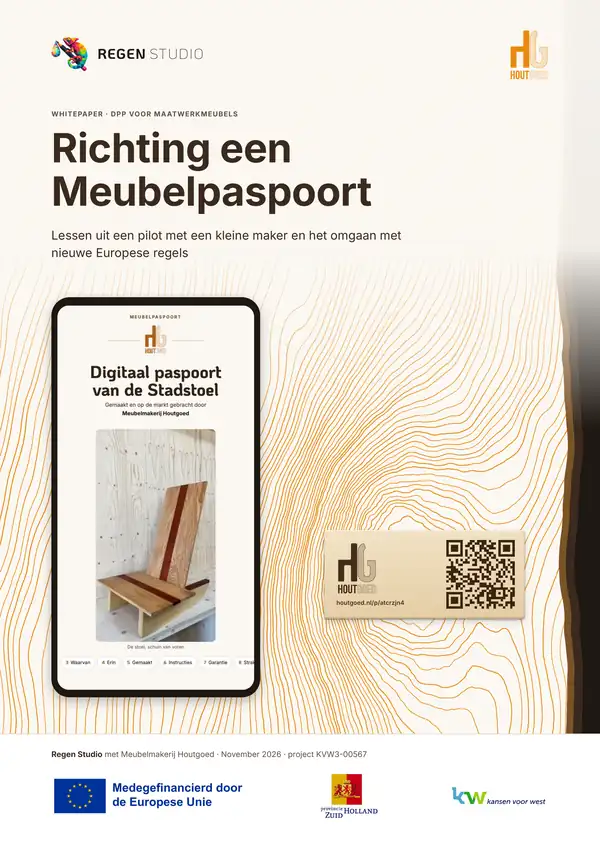
Richting een Meubelpaspoort
White paper in Dutch, 17 pages: what a furniture passport asks of a custom maker, with the Stadstoel as the trial. An English edition follows.
Download the Dutch white paper (pdf, 4.6 MB)First, find out what could be asked
The rules for furniture do not exist yet. The European Commission's working plan names 2028 for the delegated act under the ESPR, and the passport obligation usually follows eighteen months later, so probably not before the end of 2029. Waiting for that seemed unwise to us, because a small workshop does not overhaul its records in a few months. We read seventy sources, from legal texts and standards to sector studies, and arrived at 218 data points, each one a separate item of information such as the wood species or the weight of a part. Of these, 52 are already set in the EUDR or REACH, we expect 67 from the ESPR and the passport standards, and 99 are voluntary. Of the 218, 129 appear in the passport and the other 89 stay in the maker's own records. Read it as an exploration of what the rules could ask for together, not as an estimate of what the furniture act will require.
Two laws come before the furniture rules
- 6 Aug 2026formaldehyde limit, 0.062 mg/m³
- 30 Dec 2026EUDR for wooden furniture
- 2028, expecteddelegated act for furniture
- end of 2029, expectedpassport obligation, at the earliest
Six phases, of which five were already part of the working day
- 1Intake
- 2Design
- 3Purchasing
- 4Making
- 5Handover
- 6Publishing
3D model, at the designseven data points directly, plus weight, connectors and a formaldehyde indication derived from it
At purchasingformaldehyde limit since 6 August 2026, EUDR from 30 December 2026
New, publishingthe passport on the maker's own website
218 data points around one furniture passport
Each cell is one item of information that the rules, the standards or the maker could ask for. The outer rings are in the passport, split into ten topics, and the inner rings stay in the maker's own records. You can click the 52 data points that are already in law one by one in the trunk. If you want them as a list, leave your email address and we will email them to you straight away. If you send us a message, we will also show you the 67 we expect from the ESPR and the standards and the 99 voluntary ones.
Click a green or blue cell for the explanation of that data point, or an orange or grey cell to request them.
- Who sees it
- Legal basis
- Arises at
- In the prototype
- Code
Send us a message if you would like to see all the data points.
Source: the data matrix of Regen Studio and Meubelmakerij Houtgoed, as of 25 November 2026. The overview is an exploration, not an expected final count. The phase of a data point that the system calculates itself is our own assignment. The name and explanation of each data point are in Dutch, as in the original matrix.
The 52 data points from the law, as a list in your inbox
These data points rest on the EUDR, the deforestation regulation, or on REACH, the chemicals regulation. Leave your email address and we mail you the list of all 52, ordered by business phase, with the explanation of each data point.
Send us a message if you would like to see all the data points.
info@regenstudio.world
What the chair taught us
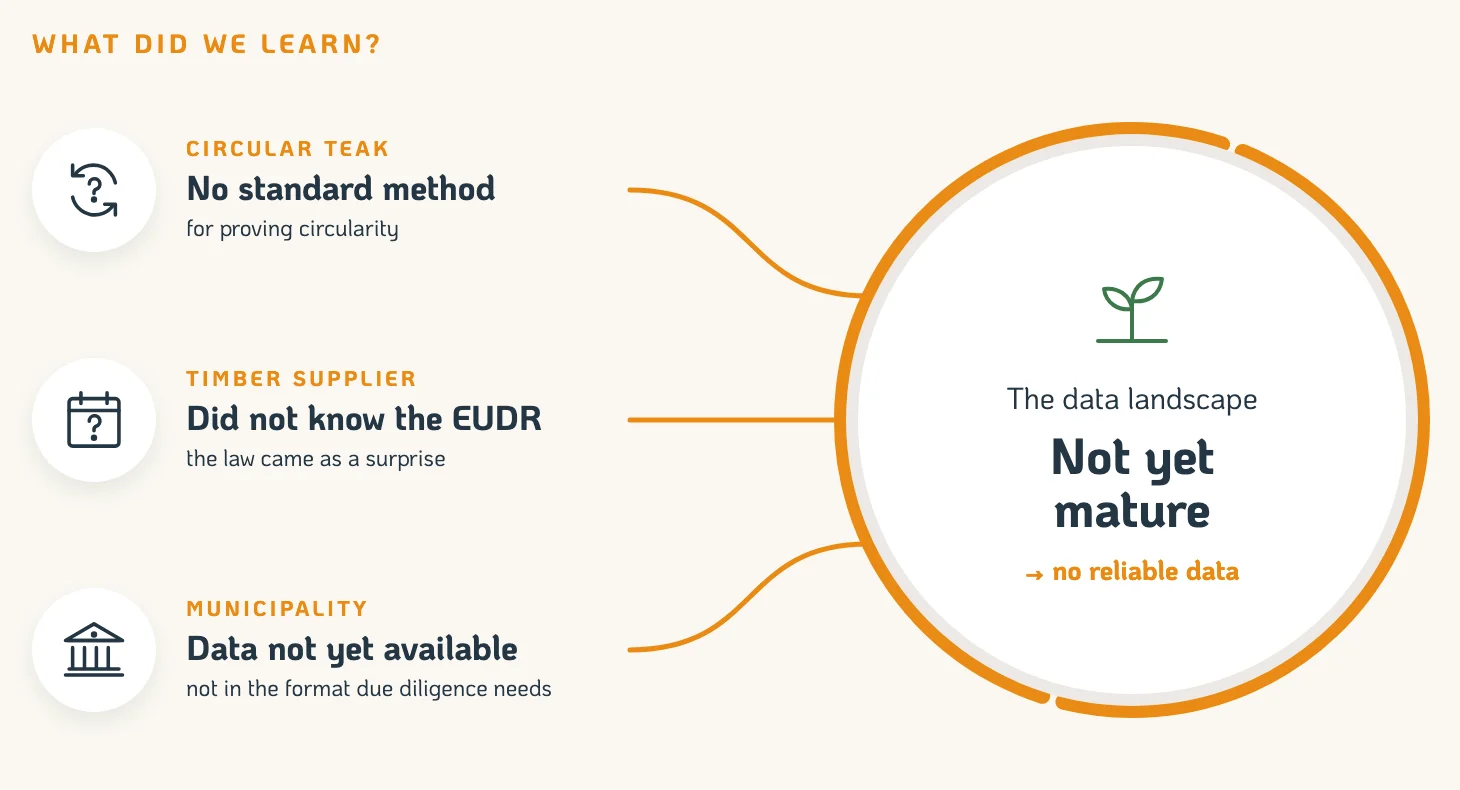
Two laws already apply, or soon will, before the furniture rules exist, and both enter the workshop at purchasing. A ready-made passport system for a small maker did not exist, so we built a light system that follows the working day: the maker drags an invoice into it, the 3D model works out weight and connectors, and the passport of the Stadstoel sits as a static file on Houtgoed's own website.
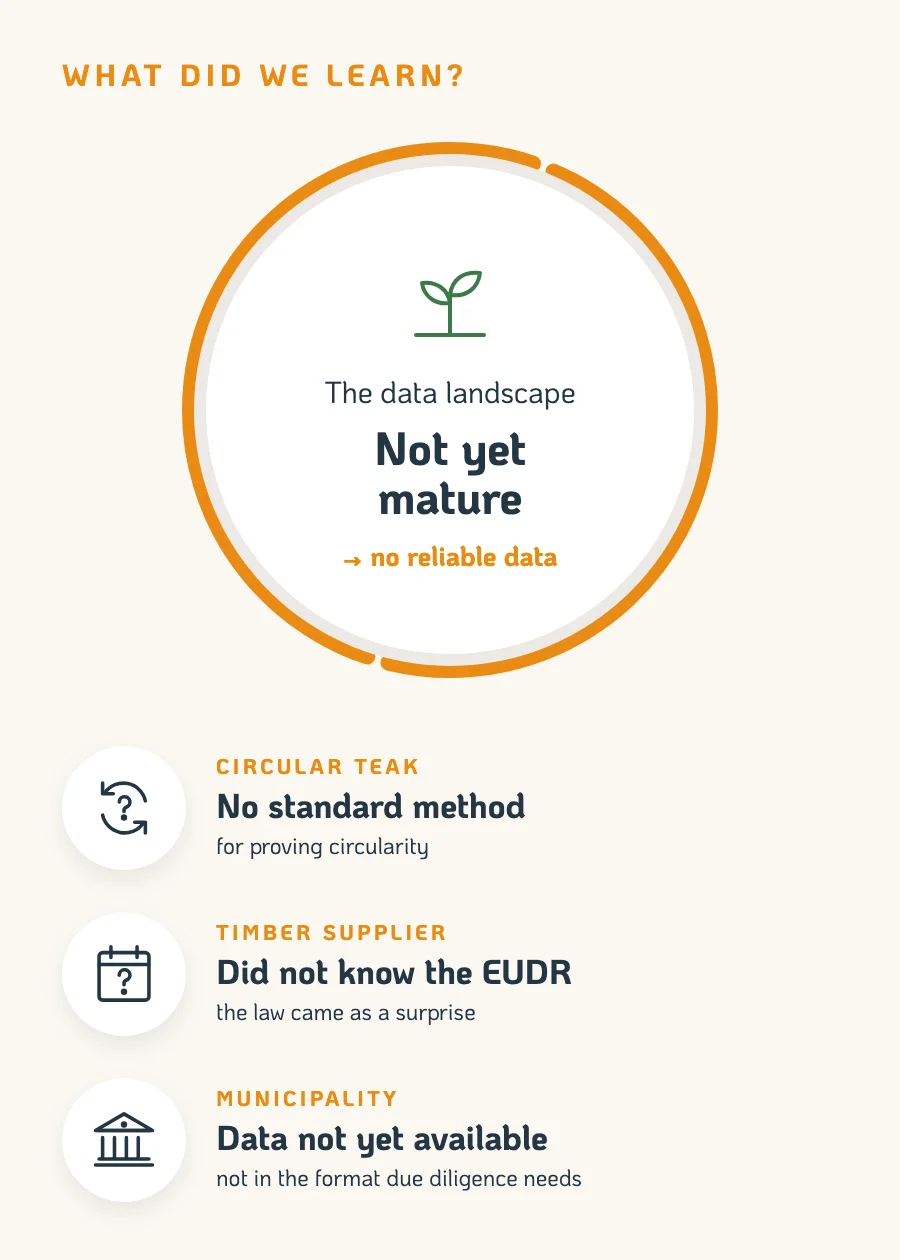
All lessons, the assumptions and sixteen recommendations are in the white paper Richting een Meubelpaspoort (in Dutch), which Regen Studio published with Houtgoed in November 2026.
A chair for the Black Jaguar Foundation

Houtgoed donated the Stadstoel to the Black Jaguar Foundation, which used it at its annual donor event to thank its first donor. The foundation works in Brazil to restore the Araguaia biodiversity corridor, turning deforested land back into forest. So the chair ends up close to the problem the EUDR is meant to solve: wood sold in Europe may not come from deforested land. You can read more about that work at the Black Jaguar Foundation.
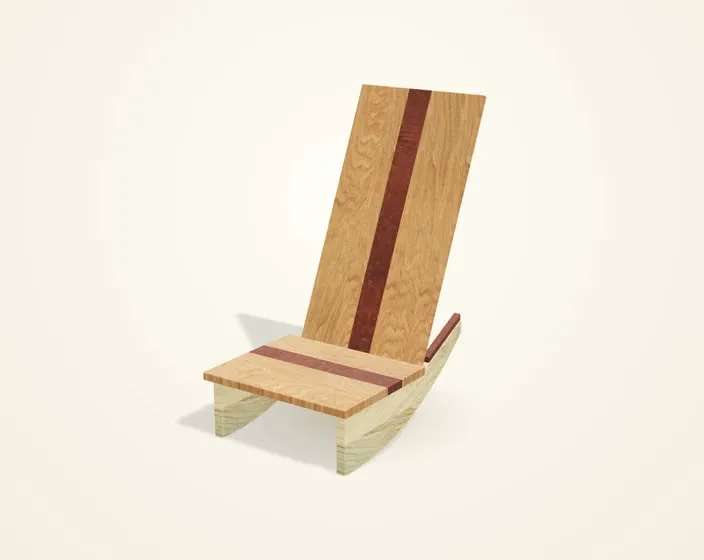 The Stadstoel, with a passport
REGEN STUDIO
Want a furniture passport too? We will help you get started.
Do you work in wood, custom-made or in small series? We are happy to show what a product passport asks of your workshop.
info@regenstudio.world