
Living labs are transforming how cities approach urban regeneration. By combining smart city technology with participatory design, communities are co-creating solutions that truly serve their needs.
Cities around the world are facing unprecedented challenges — from climate adaptation to social inequality, from digital transformation to ecological degradation. Traditional top-down approaches to urban planning are proving insufficient. What's needed is a fundamentally different way of designing urban innovation: one that is participatory, experimental, and deeply rooted in the lived experience of communities.
The Living Lab Approach
A living lab is more than a testing ground. It is a philosophy of innovation that places citizens, businesses, and institutions at the centre of the design process. Rather than developing solutions in isolation and deploying them onto communities, living labs invite communities to co-create the innovations that will shape their environments.
This approach is particularly powerful in the context of urban regeneration, where the stakes are high and the interconnections between social, ecological, and technological systems are complex. A smart city initiative that ignores community input risks creating technologically sophisticated but socially disconnected spaces.
From Smart to Wise: Rethinking Urban Technology
The smart city narrative has evolved significantly over the past decade. Early visions focused heavily on sensors, data, and efficiency. While these remain important, leading cities are now recognising that technology must serve deeper goals:
- Strengthening social cohesion and community resilience
- Restoring ecological systems within urban environments
- Creating equitable access to the benefits of digital innovation
- Building adaptive capacity for uncertain futures
The most successful urban innovations don't just make cities smarter — they make them wiser, more equitable, and more regenerative.
Living Lab Scheveningen: A Real-World Example
One of the most compelling examples of the living lab approach in action is Living Lab Scheveningen, located in the seaside district of The Hague, The Netherlands. This neighbourhood-scale innovation zone has become a testing ground for digital innovations in public space — from smart waste management and environmental sensing to interactive public installations and citizen engagement platforms.
What makes Living Lab Scheveningen distinctive is its embeddedness in daily life. Rather than being a fenced-off innovation campus, it operates within the existing urban fabric of Scheveningen — a neighbourhood that faces real challenges around tourism pressure, climate adaptation along the coastline, mobility, and social cohesion. Technologies are tested not in controlled lab environments but in the messy, unpredictable context of a living community, with direct feedback loops from residents, visitors, and local entrepreneurs.
The lab has experimented with sensor-based crowd monitoring during peak tourism season, interactive urban furniture that encourages social interaction, and digital platforms that allow residents to voice their priorities for neighbourhood improvements. Each experiment is designed not just to test a technology, but to understand how it affects community dynamics, ecological conditions, and quality of life.
Regen Studio's Role: Designing the Innovation Process
Regen Studio played a key role in guiding the innovation strategy behind Living Lab Scheveningen. Working closely with the City of The Hague's Expertise Centre for Digital Innovation & Smart City, we helped design the innovation process itself — structuring how ideas are sourced, evaluated, tested, and scaled within the living lab framework.
Our consultancy focused on ensuring that innovation efforts moved beyond technology-for-technology's-sake toward interventions that deliver meaningful social and ecological impact. This meant developing evaluation frameworks that measure not just technical performance, but community engagement, inclusivity, and regenerative potential. We helped the team prioritise projects that strengthen the neighbourhood's adaptive capacity and align with broader regenerative goals.
For a deeper look at how we supported this process, read our case study:
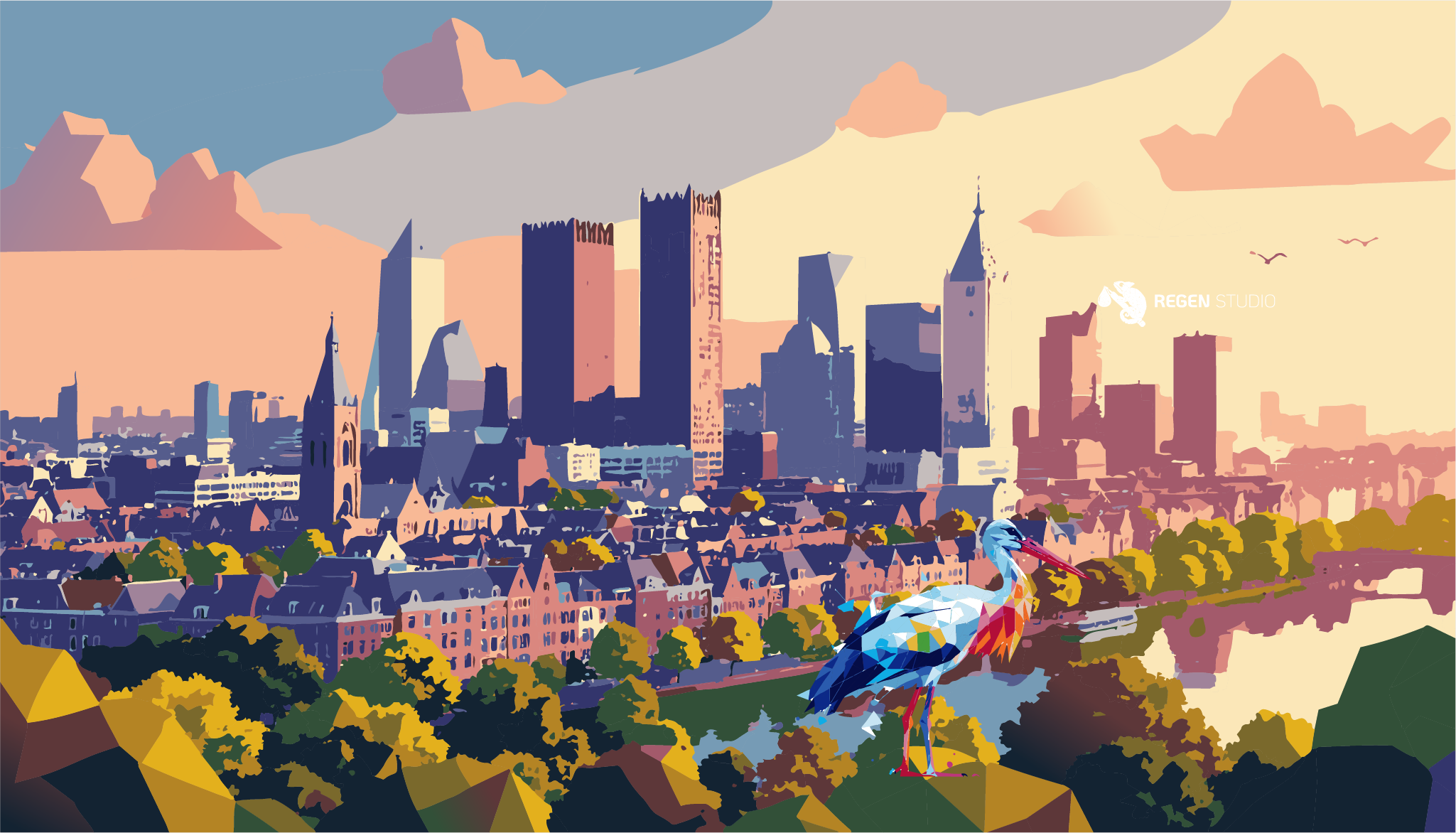
Learn more about the innovation process designed for The Hague:

Designing for Regeneration
At Regen Studio, we believe urban regeneration should go beyond restoring what was lost. It should create the conditions for continuous renewal — socially, ecologically, and economically. This means designing urban systems that:
- Generate more value than they consume
- Build community capacity and agency
- Strengthen ecological health alongside human wellbeing
- Adapt and evolve in response to changing conditions
The Living Lab Scheveningen experience reinforces a critical insight: the best urban innovations emerge when technology, community, and ecology are designed together from the start — not when technology is retrofitted onto existing problems.
Looking Forward
As more cities embrace living lab methodologies, we see a growing opportunity to fundamentally reshape how urban innovation happens. The combination of participatory design, smart technology, and regenerative thinking offers a path toward cities that truly work for both people and planet.
The journey from smart city to regenerative city is not just a technological shift — it's a cultural one. It requires new forms of collaboration, new metrics for success, and new ways of thinking about the relationship between urban environments and the ecosystems they inhabit. Living Lab Scheveningen shows that this shift is already underway.